A digital twin for air quality at a Hanoi intersection
We modeled one of Hanoi's busiest intersections to test which traffic changes clean the air. The answer surprised us: a bus-only lane did the least good, while separating every vehicle type cut simulated AQI in half.
- Station
- HAN VinUniversity, Hanoi
- UN goal
- SDG 11, Sustainable Cities and Communities
- When
- January 2026
- Where
- VinUniversity College of Engineering and Computer Science
- Team
- 4 students, 3 disciplines
- Method
- Agent-based simulation
- Tool
- GAMA platform
Overview
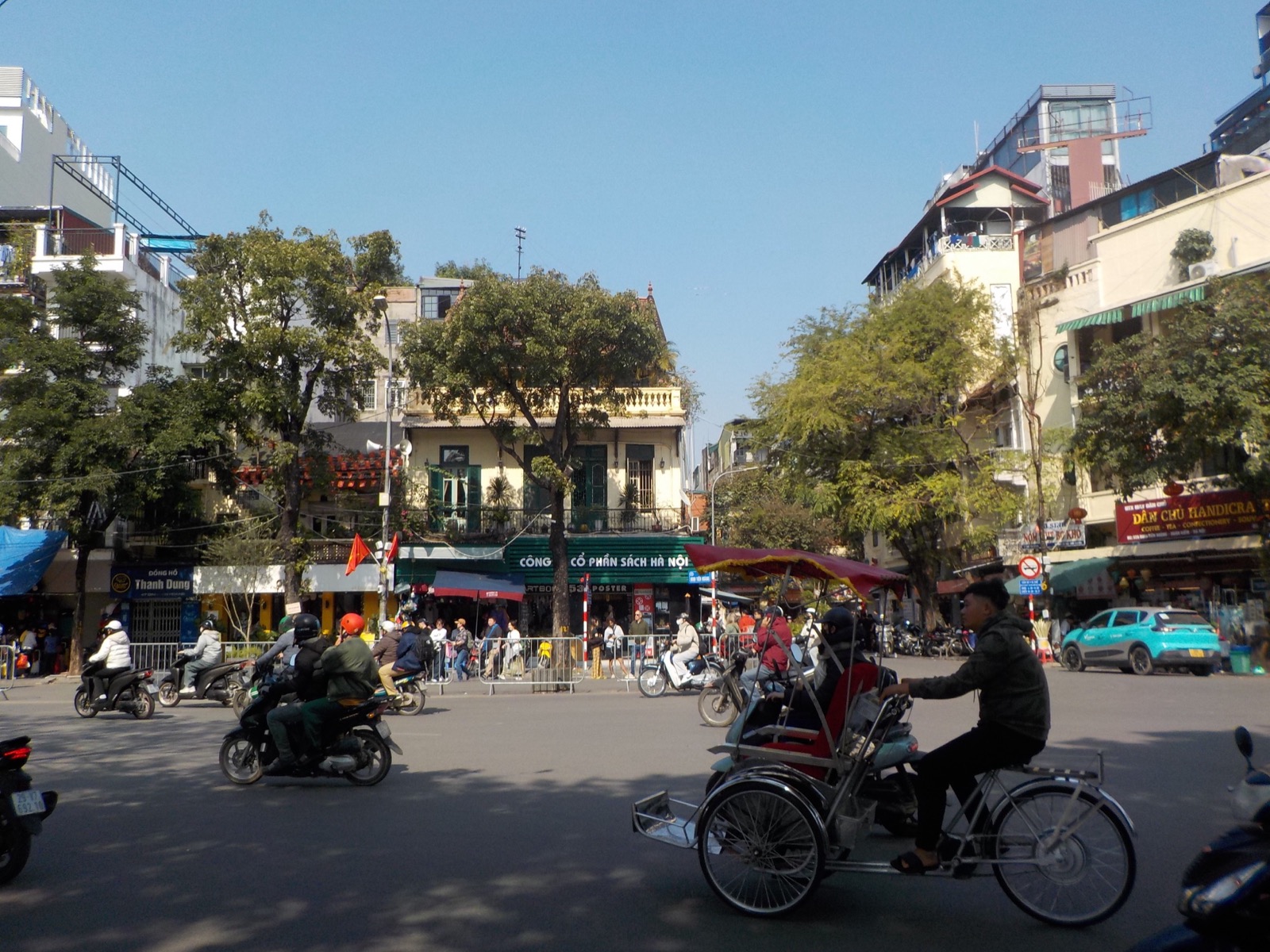
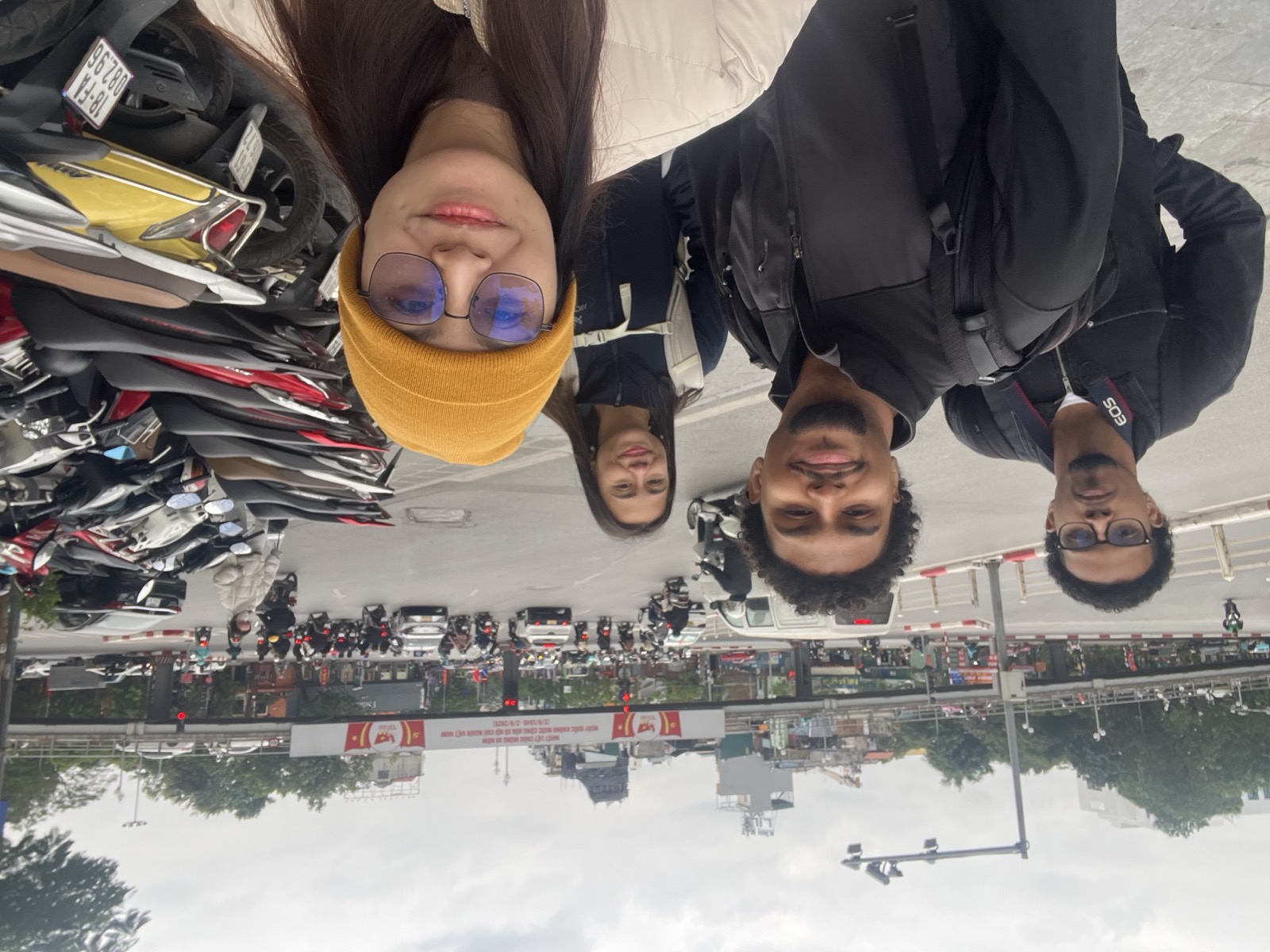
At VinUniversity, our team worked across disciplines and cultures on a real problem: traffic congestion and air quality at one of Hanoi's busiest intersections. We combined engineering analysis, computational tools, and on-the-ground observation to understand how transport behavior and urban infrastructure shape daily conditions across the city.
We visited several districts to watch traffic firsthand, then used the GAMA platform to build a digital twin. That let us test interventions virtually and estimate their impact before anyone paints a lane.
The team
On the ground
Why this intersection
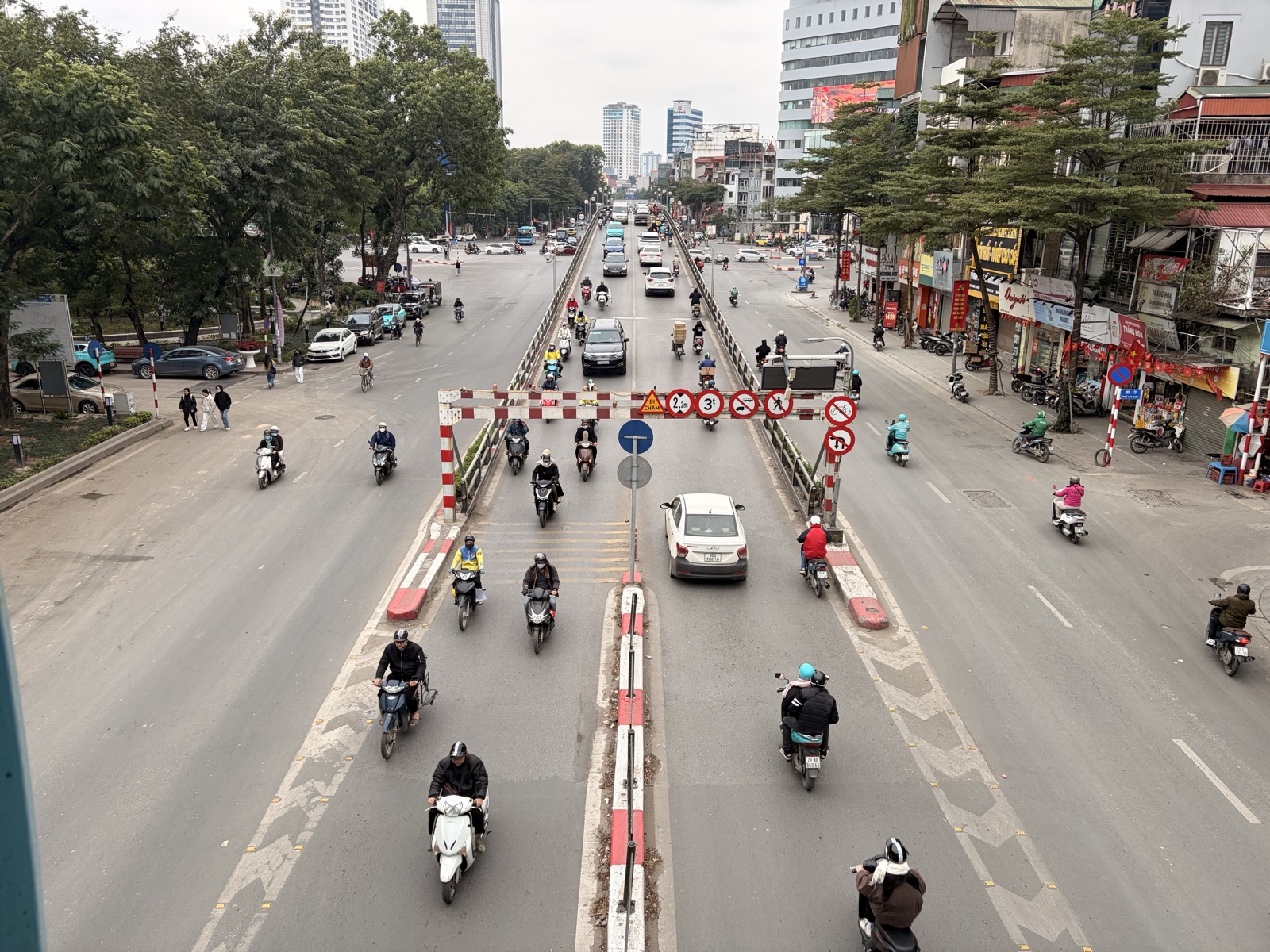
We focused on the Chùa Bộc Street intersection, a dense, mixed-traffic junction typical of central Hanoi. Its unstructured flow is exactly what makes air quality so hard to improve in Southeast Asian cities.
- Motorbikes dominate and move across any open space, not fixed lanes
- Mixed vehicle types compete for the same road
- Buses are interrupted again and again, so schedules slip
- Pedestrian crossings add stop-and-go waves
- Congestion comes from how intensely vehicles interact, not signal timing alone
The questions
- How would dedicated bus lanes change motorcycle use and public transit efficiency?
- Which vehicle types contribute most to air pollution, and how should that shape policy?
The model
Our agent-based simulation in GAMA models cars, motorbikes, buses, and pedestrians. It also models the road itself (lanes, traffic lights, bus stops) and whether drivers comply with traffic police. Each vehicle type has its own speed, lane behavior, and emission rate. The model tracks a cumulative AQI metric against a baseline with no lane separation.
Three scenarios, one baseline
Simulated AQI at the intersection. Lower is cleaner.
What we found
- Bus-only lanes increased congestion elsewhere and ranked last of the three scenarios, the opposite of our hypothesis
- The main pollution driver was stop-and-go traffic from mixed vehicle interactions
- Changing traffic flow cut emissions without electrification or vehicle bans
What it means for policy
- Separating lanes improves flow even when compliance is imperfect
- Enforcement is needed to keep the benefits over time
- Pilot corridor by corridor to clean the air while keeping access
Cleaner air at a congested intersection comes from a sequence of targeted, tested interventions, not one sweeping fix.